Juvelook explained: what it fills, what it doesn't, who it suits
A Wells Clinic dermatologist on what Juvelook is made of, the scars it is meant for, and how we decide between Juvelook, Pico Fraxel and Rejuran.


What is Juvelook, and what does it actually do?
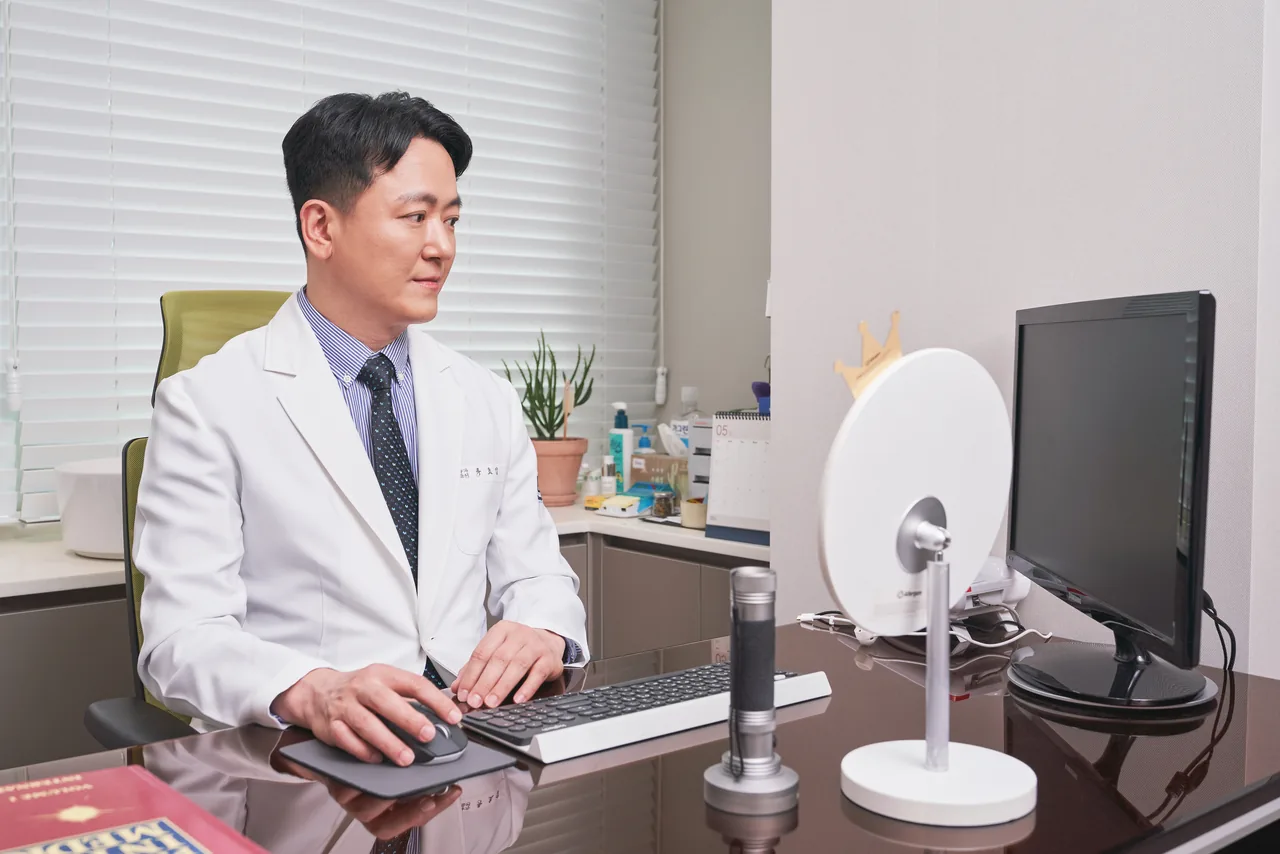
Most people who message us about juvelook have read the name on a clinic menu in Seoul and want to know one thing: will it fix the dents left behind by acne. That is a fair question, and it deserves a plain answer rather than a brochure sentence. I am Dr. Won Sin Lee, one of the chief directors at Wells Clinic in Apgujeong, and this is how I explain it in the consultation room.
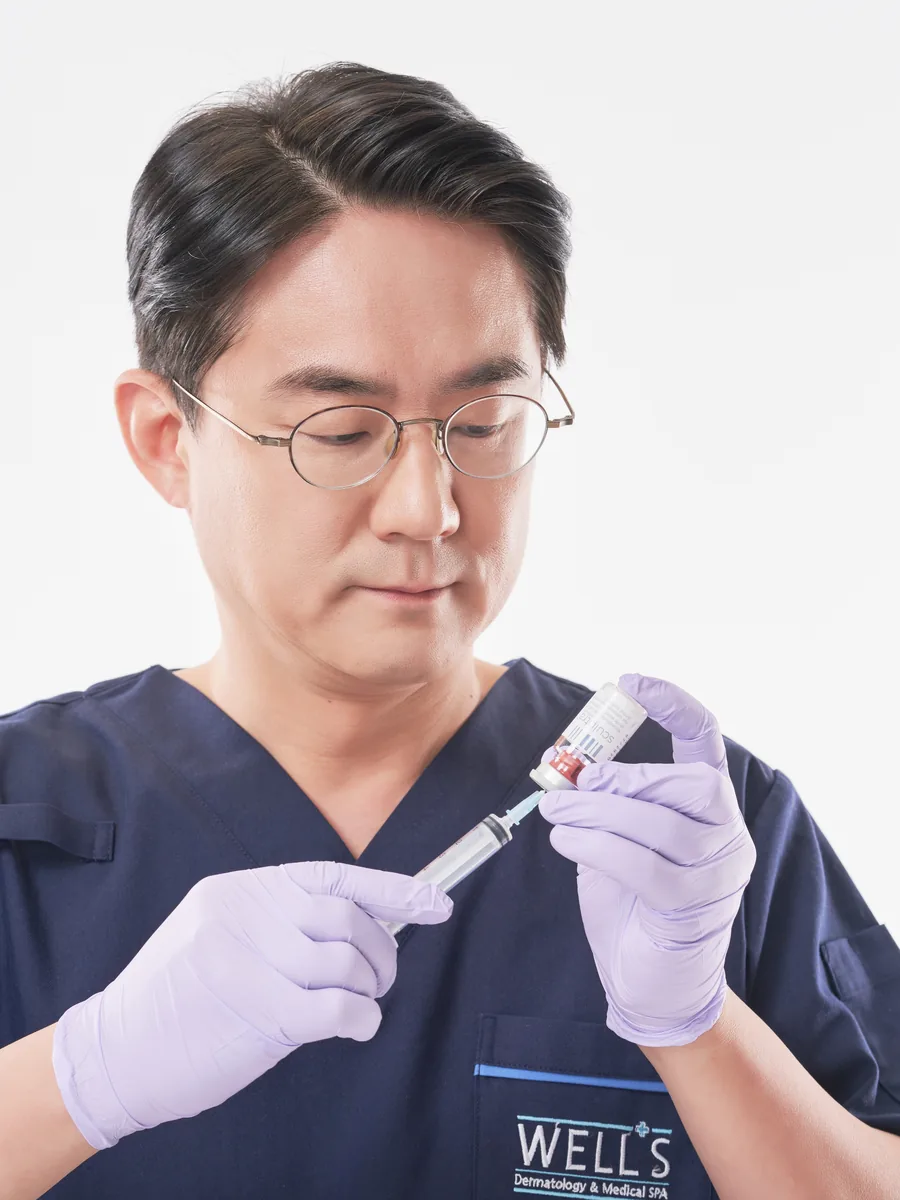
Juvelook is an injectable made of PLA (poly-lactic acid) combined with hyaluronic acid, and it is KFDA-approved. On our scar and pore treatment page we describe what it does in one line, because that line is the whole point: it fills depressed scars immediately while stimulating collagen. Two things, one injection — the dent is lifted on the day, and the skin is prompted to build its own collagen in that spot over the weeks that follow.
That is also where the honest limits sit. PLA-type materials are generally used in medicine because the body responds to them by producing collagen, which is a slower process than a filler that simply occupies space. So the immediate change you see after a Juvelook session is not the end state, and the collagen part is not instant. I would rather you know that before you book than be surprised two weeks later.
A second thing worth saying early: Juvelook is a tool for a specific problem, not a general glow treatment. I do not present it as a volume filler and I do not present it as a skin booster. It earns its place when there is a depression in the skin that needs to be raised.
Who is Juvelook for — and who do I send elsewhere?
In my consultations, the people who benefit most from Juvelook are the ones pointing at a specific shadow on their cheek in the bathroom mirror. Depressed scars — the sunken marks left after acne has healed — are what the material is designed to address.
- A good match: depressed, sunken scars where the skin surface has dropped below the level around it.
- A partial match: mixed skin with some depressed scars plus general roughness and enlarged pores. Juvelook may be one part of the plan, not the whole plan.
- Not the tool: active, inflamed acne. Injecting into skin that is still breaking out is not the right order — the acne is treated at its source first. See acne root treatment.
- Not the tool: enlarged pores on their own. Pores respond to a different approach — see pore reduction, where Pico Fraxel is used to restore dermal elasticity so pores tighten from underneath.
- Not the tool: sagging or a jawline that has lost its line. That is a lifting question, and I would say so rather than sell you an injection.
The most common correction I make before treatment is expectation, not technique. A scar that has been there for ten years is a structural change in the dermis. Improving it is realistic; erasing it is not a promise I make to anyone, and individual results vary.
Not sure whether your scars are the depressed type Juvelook is meant for? Send a straight-on photo taken in daylight, without makeup, and a dermatologist will tell you what we would actually plan.
Send a photo, get an honest readWhy do people search for Juvelook in Korea specifically?
Juvelook Korea is one of the phrases that brings people to us, and the reason is simple: many injectables reach Korean clinics early, and Seoul is where patients expect to find a dermatologist who has worked with them long enough to know when not to use them. Wells has been in Apgujeong since 2008, and acne scars have been part of the daily work here the whole time.
What I would look for in any Korean clinic — ours included — is not the newest product name on the price list. It is whether the person holding the syringe examined your skin first, and whether they were willing to tell you that a different tool suits you better. At Wells, consultation, diagnosis and treatment are all done by a board-certified dermatologist, not handed to a nurse or an aesthetician.
How we decide at Wells: scar type first, device second
Acne scars are not one thing. Some are shallow and broad, some are narrow and deep, some sit in skin that is also rough and porous. That is why our approach combines tools rather than committing to one.
The options we work with
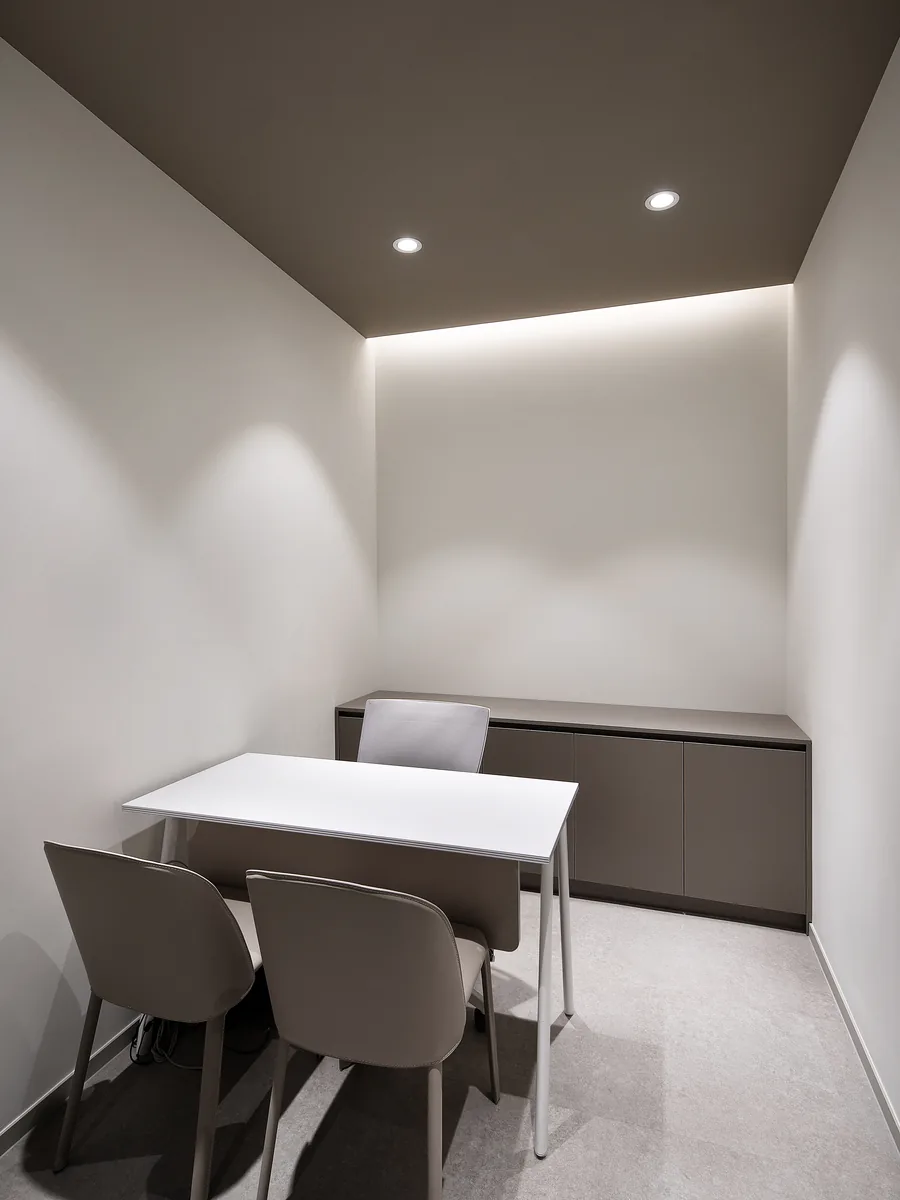
- Pico Fraxel creates optical breakdown (LIOB) inside the dermis with almost no heat damage to the surface — no oozing, no artificial skin dressing, and any redness usually clears in three to four days.
- Juvelook (PLA + hyaluronic acid, KFDA-approved) fills depressed scars immediately while stimulating collagen.
- Mosaic fractional laser, microneedle RF, Aquapeel and the Clarity dual laser are combined depending on scar type and pore condition.
Which of these goes into your plan depends on what we see, and we show you what we see: results are reviewed with you under a dermascope, not described in vague language. For me, that matters more than the brand name on the box. A deep, sunken scar and a rough, pore-heavy cheek are different problems even when they sit on the same face, and treating them with the same tool is how people end up disappointed.
Juvelook vs Rejuran: are they the same kind of injection?
This is the question I get most often, usually because both names appear on the same clinic page. They are not interchangeable. Juvelook is PLA with hyaluronic acid, and at Wells it is used where a depressed scar needs filling and collagen stimulation. Rejuran is a polynucleotide (PN) skin booster derived from salmon; the formula we use, Rejuran HB+, adds hyaluronic acid and lidocaine, and it works on the skin's internal environment — elasticity, fine lines, texture and oil–moisture balance — rather than filling a specific dent.
| Juvelook | Rejuran HB+ | |
|---|---|---|
| Material | PLA + hyaluronic acid, KFDA-approved | Polynucleotide (PN) + hyaluronic acid + lidocaine |
| What it is used for at Wells | Filling depressed scars while stimulating collagen | Skin regeneration environment, elasticity, fine lines and texture |
| Comfort | Anesthetic approach explained at consultation | Lidocaine in the formula — 53% less post-injection pain on average (VAS) than Rejuran Healer |
| Course | Set by the dermatologist after examining the scars | Four sessions at 2–3 week intervals recommended |
In practice, one does not replace the other, and some people are better served by the booster route than by an injection into a scar. If that sounds more like your skin, our post on Rejuran in Seoul covers it in detail, and the full menu sits on the injectables and skin boosters page.
How much does Juvelook cost at Wells Clinic?
Price for this treatment is confirmed at your consultation. I know that is not the number you came for, and there is a reason we do not publish a flat figure for it: how much Juvelook a face needs depends entirely on how many scars there are, how deep they sit, and whether laser work belongs in the same plan.
What I can tell you is how the pricing works here. All our prices are listed in Korean won and exclude 10% VAT, and the dermatologist confirms your plan and the final price at the consultation, before anything starts. Nothing is added mid-treatment.
Send photos of the scars and your travel dates, and we will come back with what we would plan and the price for it — before you commit to anything.
Ask for a Juvelook quotePlanning Juvelook around a trip to Seoul
Most of the people asking me about Juvelook are flying in, which changes the planning. Scar work is rarely a single-visit story, so what we do is build a plan that fits the days you actually have in the city and tell you honestly what can and cannot be finished in that window.
- Message us on WhatsApp or Instagram with your concern, photos and travel dates. You get a suggested plan and an appointment time before you travel.
- At the clinic, a dermatologist examines your skin and confirms the plan and the price.
- Tell us your flight dates and the dermatologist will advise on timing around the treatment.
- Treatment and aftercare happen on the same floor, and you can reach us on WhatsApp afterwards.
We are on the 8th floor of the Apgujeong Building, 842 Nonhyeon-ro, Gangnam-gu — about five minutes on foot from Apgujeong Station, Exit 3, on Line 3. Open Monday to Friday 10:00–20:00 and Saturday 10:00–17:00, with lunch from 13:00 to 14:00, closed Sundays and Korean public holidays. Consultations are available in English, so you can plan the whole visit without a translator.
Why I would have Juvelook done by a dermatologist
An injection into scarred skin is a medical decision about depth and placement, made on skin that has already been damaged once. At Wells, every injection is placed by a board-certified dermatologist. My own training was at Asan Medical Center in Seoul, where I completed my residency and board certification in dermatology and where I am an adjunct professor in the department; my colleagues' backgrounds are on the doctors page.
Side effects are possible with any injectable, and results vary from person to person. That is exactly why every treatment here starts with a consultation rather than a menu order — and why, if Juvelook is not the right answer for your scars, you will hear that from me in the room rather than after the fact.
Send your scar photos — a dermatologist will tell you if Juvelook fits
Tell us what bothers you, add a daylight photo without makeup, and let us know when you will be in Seoul. A dermatologist replies with the plan we would actually recommend, the price, and available times.
Message the clinic on WhatsAppReplies on WhatsApp · prices in KRW, VAT excludedBefore you message us
What is Juvelook made of?
Juvelook is PLA (poly-lactic acid) combined with hyaluronic acid, and it is KFDA-approved. At Wells it is used to fill depressed scars immediately while stimulating collagen.
Is Juvelook a filler or a skin booster?
We use it for depressed scars — it fills the depression and stimulates collagen at the same time. It is not something I present as a volume filler for contouring, and it is not the same category as a polynucleotide skin booster such as Rejuran HB+.
Can Juvelook be combined with laser treatment?
Yes. Depending on scar type and pore condition, Pico Fraxel, Mosaic fractional laser, microneedle RF, Aquapeel and the Clarity dual laser are combined with Juvelook. The dermatologist decides the combination and order at consultation.
How much does Juvelook cost in Korea at Wells?
Price for this treatment is confirmed at your consultation. Prices at Wells are in Korean won and exclude 10% VAT, and the dermatologist confirms your plan and the final price before anything starts.
How many Juvelook sessions will I need?
That depends on how many scars there are and how deep they sit. The dermatologist assesses your skin in person and tells you what the plan looks like, including whether it fits the dates you are in Seoul.
How do I ask about Juvelook from overseas?
Message us on WhatsApp (+82 10-8603-2372) or Instagram @wellsclinic.global with photos of the area and your travel dates. You will get a reply in English with whether Juvelook fits and available appointment times.
Results and recovery vary by individual. Every treatment carries possible side effects, which are explained at the consultation. Prices are in Korean won, VAT excluded, and confirmed at your consultation. This article is general information from the clinic, not a diagnosis.
Dr. Won Sin Lee
- Board-certified dermatologist, Asan Medical Center, Seoul
- Residency & board certification in dermatology, Asan Medical Center
- Adjunct professor, Department of Dermatology, Asan Medical Center
- Former director, Bokji Dermatology Clinic, Korean Leprosy Welfare Association
- Commendation for Outstanding Public Health Doctor